
Choose the Right Tool for Your Strength Journey
What if one piece of equipment could double your results — or stall them? Choosing the right tool changes your progress, safety, and enjoyment. You’ll save time and avoid frustration when your equipment matches your priorities.
This short guide highlights the main trade-offs: versatility, specificity, cost, space, and technique. You’ll see why dumbbells are flexible, kettlebells develop power and conditioning, and machines offer safer isolation and steady load.
By the end you’ll understand how goals, budget, experience, and available space steer your choice. Use that clarity to pick equipment that fits your lifestyle and keeps you consistent. Ready to compare strengths and trade-offs? Start here and choose what keeps you moving forward daily.
How to Decide: Goals, Space, Budget, and Experience
Start with your primary goal
Ask yourself what matters most right now: building maximal strength, adding size, improving conditioning, regaining mobility after injury, or simply staying consistent. Goals change the answer. If you want heavy, slow strength gains you prioritize load capacity; if you want fat loss and cardio, you prioritize movement variety and tempo.
Think in scenarios: a busy parent with 25–30 minutes needs equipment that lets them combine strength and conditioning; a weekend lifter chasing a raw deadlift needs something that allows heavy, progressive loading. Write down your top one or two goals — everything else will fall into place.
Consider space, budget, and time
Be realistic about where gear will live and how often you’ll use it. Adjustable solutions save space but can cost more up front; single fixed pieces are cheaper per pound but need room.
If you want compact versatility, adjustable options are a good bet.
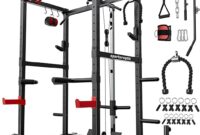
For kettlebells, look at durable cast-iron options like Kettlebell Kings or CAP, which are cost-effective per bell. For machines, note that selectorized stacks (Life Fitness-style) cost more and need dedicated floor space; home cable towers or plate-loaded trainers can be a middle ground.
Experience, injuries, and coaching
Be honest about your movement skill and injury history. Machines can protect you when rehabbing an elbow; kettlebells require hip-hinge competency; dumbbells demand stability and control. If you train alone and are new, start with simpler progressions or guided online programs. If you have a coach, you can safely explore complex movements sooner.
Quick decision checklist
Use this to prioritize purchases:
Next up: we’ll dig into dumbbells — why they fit so many goals and how to choose the right set for your situation.
Dumbbells: The Most Versatile All-Rounder
Dumbbells are the go-to for most home gyms because they let you do almost everything: press, pull, hinge, squat, carry, and sequence movements for conditioning. You’ll get unilateral training to fix imbalances, easy progression by adding small increments, and a huge variety of exercises that suit both strength and hypertrophy goals. Think of them as the Swiss Army knife of iron — reliable in nearly every situation.
Why dumbbells shine
Programming tips: simple, effective approaches
Use standard templates and adjust for your goals:
High-value exercises to master
Small-space modifications
If you have limited space, use one adjustable pair (Bowflex SelectTech 552 or PowerBlock) or a single heavy dumbbell for complexes (swing/clean/press/goblet). Store vertically or under a bed; a small rack like the CAP hex set saves floor clutter. Swap bilateral moves for unilateral progressions when you can’t go heavier.
When dumbbells might fall short
If you’re chasing maximal single-rep strength (e.g., elite bench or squat), dumbbells cap out—bars and plates let you load more consistently. Also, truly asymmetrical work (specialty barbell variations) can be easier with implements designed for them.
Buying quick checklist
Next, we’ll look at kettlebells — how their unique shape and swing patterns change the game for power and conditioning.
Kettlebells: Power, Conditioning, and Movement Efficiency
Kettlebells are unique because their offset handle and compact mass invite hip-driven, ballistic movement. You’ll get explosive posterior-chain power, improved coordination, a grip challenge that carries over to everything else, and conditioning that feels more like sport than slogging on a bike. Think of kettlebells as the tool that teaches you to produce force quickly and manage momentum.
Hallmark kettlebell moves and what they build
Safety and technique pointers (quick how-to)
Programming — strength vs conditioning
Strength session example: 5 sets of 5 heavy double-kettlebell swings (or 3–5 single-arm snatches), paired with 3–5 Turkish get-ups per side for low-rep technical work.
Conditioning session example: 12-minute AMRAP — 15 kettlebell swings, 10 goblet reverse lunges, 6 cleans (alternating); scale rest to keep form.
How to scale: choose a weight you can perform 10–15 clean swings with perfect technique for conditioning; for strength, use a weight that challenges you for 3–6 reps while keeping form. Progress by increasing reps, then weight, or by adding a second kettlebell.
When kettlebells aren’t the best and how to mix
They aren’t ideal for maximal single-rep strength tests or very heavy bilateral loading (heavy back squats, max bench). Combine kettlebells with dumbbells or machines: use kettlebell swings for power and conditioning, then hit machines for heavy, controlled hypertrophy or barbell work for absolute strength. A client I coached cut 0.1s off their 40-yard dash after eight weeks of focused swing work paired with heavy leg presses — real transfer, practical results.
Up next: machines — where consistent load and safer isolation help you target weaknesses and build controlled volume.
Machines: Safer Isolation and Consistent Load
Why machines still matter
Machines give you predictable resistance and guided movement — a boon when you need joint-friendly reps, safe heavy sets without a spotter, or exact fatigue on a specific muscle. If you’re rehabbing a shoulder, nursing a knee, or in a high-volume hypertrophy block, machines let you push workload while controlling stress and eliminating the balance puzzle free weights demand.
Common machine types (and when to use each)
How to use machines effectively — actionable tips
Watchouts and limitations
In practice: a client returning from a rotator cuff strain rebuilt pressing volume first on a chest-supported press and cable flyes, then translated that muscle into a safer, pain-free return to barbell benching within eight weeks — the machines did the heavy lifting for the rehab phase. Up next, you’ll learn how to blend dumbbells, kettlebells, and machines into a program that actually fits your life and goals.
Mixing and Matching: Build a Program That Fits You
Actionable templates (pick one and adapt)
Raw strength — 3 days/week
Hypertrophy — 4 days/week (upper/lower split)
Fat loss / conditioning — 3–5 days/week
Rehab / retraining — 2–4 days/week
Decision flow: what to choose each phase
Progressing past plateaus
Home vs. commercial gym — real-world tradeoffs
Mini-FAQ
Next, we’ll wrap up with how to choose what keeps you consistent — and progressing — long-term.
Pick What Keeps You Consistent — And Progress
At the end of the day, the best tool is the one you actually use. Choose dumbbells, kettlebells, machines, or a mix based on your goals, space, budget, and what feels fun—then commit to showing up. Track workouts, measure progress, and be willing to tweak equipment and programming when gains stall or your schedule changes.
Try combinations, listen to your body, and prioritize consistency over perfection. If something isn’t working, experiment for a few weeks before deciding. Keep what helps you train regularly, and progress will follow. Start today and enjoy the process.

Machines saved my knees after an old soccer injury. Isolation work on a machine feels so much safer when I’m rehabbing.
Also: I love that the Body-Solid 5lb Weight Stack Adapter Plates are mentioned — cheap little additions that let me microload a machine that’s otherwise too heavy.
Not every gym situation needs free weights, and the article nailed that nuance.
Appreciate the perspective, Carlos. Rehab and controlled loading are big reasons some people prefer machines — glad you found the adapter plates useful.
100% — when I came back from a knee issue, machines let me rebuild confidence. Microloading with small plates made progress measurable.
Fantastic article. I think the key takeaway is ‘what keeps you consistent’ — so true.
I’ve used OLIXIS Wide Grip Kettlebell Set 5-20lb for conditioning circuits, then rotated in the CAP hex set for heavier rows and lunges. When weather’s bad, my Adjustable Dumbbells Pair 15-in-1 Up To 52.5lb covers everything.
A few practical tips from my experience:
– If you’re new, start with a machine or light dumbbells to learn movement patterns.
– Buy one good adjustable piece first if you’re on a budget.
– If you love metabolic conditioning, add a kettlebell (even a single one is fine).
Anyone else have a ‘starter kit’ they swear by?
This helps a ton — thanks Hannah! I’m a total beginner so the step-by-step is exactly what I needed.
Love the starter kit checklist — very actionable. Thanks for sharing your real-world rotation.
Agree with the single kettlebell point — saved me money and motivation.
My starter was simple: adjustable dumbbells + one 12kg kettlebell. Kept me consistent for 2 years. The key is to pick weights that let you progress.
Glad it’s useful! Start small and be patient — progress stacks up fast if you stay consistent.
Good read. I’m torn between the CAP Rubber-Coated Hex Dumbbell Set with Rack and the adjustable pair. I have a tiny garage but want something that lasts.
Anyone compare the two for durability and noise? I do drop dumbbells occasionally (oops).
I had a pair of rubber hexs for 5 years and they survived me dropping them more than once. The rack was a game changer for the garage clutter 😂.
CAP hex dumbbells are great for durability and floor protection; rubber coating helps with noise. Adjustables save space but (depending on model) can wear out faster and aren’t as forgiving if dropped. For drops, the hex set is safer.
I liked the comparison on movement specificity. If you’re training for sports, kettlebells and free weights win. If you’re rehabbing or want pure hypertrophy without worrying about form too much, machines are brilliant.
Also — for beginners who want both conditioning and strength without tons of kit: BowFlex SelectTech 840 Adjustable Kettlebell 8-40lb + a small set like OLIXIS is a fun combo.
PS: The OLIXIS handles felt nicer to me than cheap kettlebells — smoother swing.
Exactly. Test grip feel in-store if you can — saves headaches later.
Good point on specificity vs. convenience. Thanks for the kit suggestion — that’s a nice middle-ground setup.
Nice tip about handles — little ergonomic differences make a big difference over months of training.
Kettlebells seem trendy but I’m not convinced they’re necessary unless you’re into CrossFit or weird flows.
I do like the idea of mixing though — maybe one kettlebell for swings and dumbbells for presses.
Totally fair. Kettlebells excel at dynamic, hip-dominant work and conditioning. If your goals are pure strength in classic lifts, dumbbells or machines might be more straightforward.
Interesting — maybe I’ll try a single BowFlex SelectTech 840 Adjustable Kettlebell to test the waters before buying a cast-iron one.
Kettlebells are not just CrossFit lol — they helped my conditioning and posture. But yeah, you don’t need a closet full of them if you have adjustable dumbbells.
That’s a smart, low-risk approach. Try a single weight and see how it fits into your routine before expanding.
LOL machines are for lazy people — jk 😉
But seriously, I tried kettlebells and ended up hitting my thumb with one (painful). Dumbbells are safer, imo. Adjustable stuff is great but the mechanism sometimes feels sketchy. Anyone else had equipment fail on them?
Sorry about the thumb — that’s rough. Mechanisms can feel sketchy on cheaper adjustables. If you’re worried about failure, look for well-reviewed models and check the warranty.
I once had a dumbbell handle wobble on a cheap adjustable set. Returned it. Buy decent quality and inspect before heavy use.
Great breakdown — love that you didn’t pretend one tool rules them all.
I’ve got a small apartment and the Adjustable Dumbbells Pair 15-in-1 Up To 52.5lb has been a lifesaver for space and versatility.
I supplement with a single BowFlex SelectTech 840 Adjustable Kettlebell for swings and conditioning.
For anyone worried about cost: buy one adjustable piece first and then add specific kettlebells later if you find you need them.
Also, the article’s point about consistency is dead-on — I stopped buying gear I don’t use. 👍
How do you like the BowFlex 840 for actual kettlebell feel? I heard the handle shape on adjustables can feel weird for swings.
Thanks, Maya — glad that approach worked for you. The space/budget progression you describe is exactly what we wanted to highlight: start compact, then add specialty tools as needs become clear.
Ethan — it’s fine for light to moderate swings. The handle is chunkier than a cast iron kbell, so if you’re doing heavy, high-volume swings I’d still recommend a real kettlebell. For apartment workouts though it’s almost unbeatable.
I’m just starting and super overwhelmed. Budget is about $300, small apartment, and I want to get stronger and lose fat.
Which should I pick as my first buy from the product list? Adjustable, OLIXIS set, or maybe CAP hex set? Can’t decide.
Thanks everyone — super helpful. I’ll hunt for a good adjustable deal.
Agree with admin. Adjustables give the most bang for buck and are perfect for apartment use. You can add a single kettlebell later for swings.
If you prioritize simplicity and consistent progress, start with adjustables. Then maybe pick up an OLIXIS or cheap kettlebell later for conditioning.
With that budget and space, the Adjustable Dumbbells Pair 15-in-1 Up To 52.5lb is probably the best first buy — covers most exercises, saves space, and keeps options open for future kettlebell purchase.