

Which tracker will actually supercharge your results—will the Charge 6 make your workouts smarter, or is the trusty Charge 5 the sneaky better pick for your goals?
Decide between the Fitbit Charge 6 and Charge 5 with a friendly guide. You’ll get a quick snapshot of differences in tracking, health tools, design, battery life, and value to pick the best tracker for your goals and lifestyle needs.
Connected Fitness
You get a modern fitness tracker that blends accurate health sensors with built‑in Google apps, making navigation, music and payments convenient from your wrist. Battery life and comfort make it easy to wear all day, though you may encounter occasional connectivity glitches and region limits for some services.
Health Focused
You get a capable tracker that focuses on core health metrics—sleep, HR, stress and readiness—packed into a comfortable, lightweight design. It’s great for day‑to‑day tracking and runs, but GPS reliability and fewer native smart app features may limit it if you want extensive on‑wrist apps.
Fitbit Charge 6
Fitbit Charge 5
Fitbit Charge 6
Fitbit Charge 5
Fitbit Charge 6
Fitbit Charge 5
Head-to-Head Specs Snapshot
Fitbit Charge 6 — Core specs
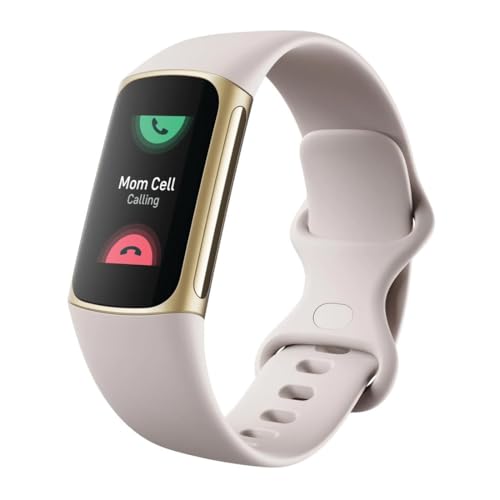
The Charge 6 brings Google apps right on your wrist so you can use Maps, Wallet, and YouTube Music in addition to fitness tracking. It focuses on advanced health insights and seamless on-device features.


Fitbit Charge 5 — Core specs
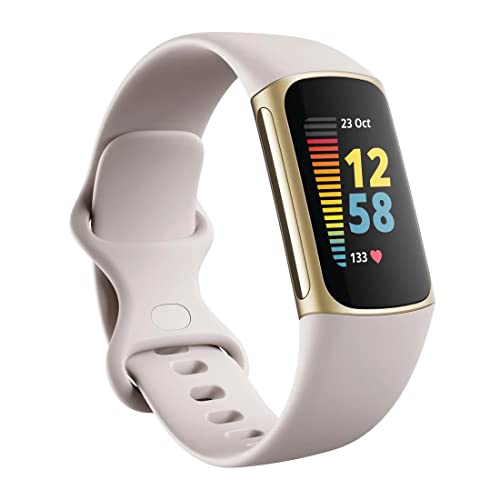
The Charge 5 is a lightweight tracker that emphasizes health metrics and a bright AMOLED display, with core Fitbit analytics and built-in GPS.


Quick checklist — scan to compare
Comparison Chart


Health & Fitness Features: Which Tracks Better?
Look closely: both trackers give you the core Fitbit health suite, but they favor different strengths. Below I break down how each handles heart rate, stress & sleep, exercise metrics, GPS and the coaching tools you’ll actually use.
Heart rate, stress & sleep — real‑time monitoring and recovery
Charge 6: You get true 24/7 heart‑rate tracking, Daily Readiness, a Sleep Score and a Stress Management score — and a unique perk: Heart Rate on Exercise Equipment, so compatible treadmills and ellipticals can display your watch HR in real time. Fitbit says Charge 6 also benefits from improved sensor algorithms for cleaner HR and sleep signals.


Stress tools and health metrics — what Charge 5 emphasizes
Charge 5: Also offers 24/7 HR, Daily Readiness and a prominent Stress Management Score with an on‑wrist EDA sensor and (where available) ECG support. Its Health Metrics dashboard exposes SpO2, HRV and skin temperature variation — useful if you want more physiological detail in the app.

Exercise metrics, GPS and coaching — who wins on workouts
Design, Comfort & Daily Wear: Fit, Feel, and Battery
Form factor, display and touch
You’ll notice the Charge 6 trades a slightly slimmer, more gadget-forward chassis for extra on‑device features (Google apps, Maps, Wallet). The Charge 5 reads as more of a classic fitness band with a bright AMOLED that’s easy to glance at in daylight. Both screens are responsive to touch; Charge 6’s interface feels more phone‑like when you use on‑device apps.
Strap options and fit
Both trackers include S and L bands (one size) so you won’t need extra purchases to get a good fit. The Charge 5 is the lighter, more “band-like” option and hugs your wrist during sleep or HIIT. Charge 6 is marginally firmer because of its added hardware, but still comfortable for all‑day wear once you dial in the strap tension.
Durability and water resistance
You can wear either in the shower and during swims—both are built for everyday sweat and splash protection. If you do rougher activity, Charge 6’s sturdier feeling case gives a bit more confidence against knocks; Charge 5’s slimmer profile is less obtrusive under long‑sleeve shirts.
Charging ease and realistic battery expectations
Both use Fitbit’s proprietary magnetic charger that snaps on quickly. Realistic charging cadence depends on how much GPS, continuous heart rate, and on‑device apps you use:

Price, Value & Who Should Buy Which
Price snapshot
Right now the Charge 6 sits around $120 while the Charge 5 is listed near $160. That makes the newer Charge 6 the better sticker-price in this listing — but price can shift with sales and bundles, so check current offers.
Value breakdown
Charge 6 gives you two clear extras: built‑in Google apps (Maps, Wallet, YouTube Music) that work on‑wrist, plus a 6‑month Premium membership. That adds convenience and on‑device utility beyond pure health tracking. Charge 5 delivers a proven health stack — Daily Readiness, Stress Management, ECG in some regions and a bright AMOLED — so you get robust metrics and recovery guidance that many users rely on.
Who should buy which
Quick buying tips
Final Verdict: Pick the Right Charge for Your Goals
If you want a clear winner, the Charge 6 is it. It gives you Google integration, incremental tracking improvements, and six months of Premium for deeper insights. Choose the Charge 6 when you value newer integrations, on-device apps, and the small accuracy and convenience gains that help you train smarter.
Choose the Charge 5 when core health metrics, stress tools, and value matter more: accurate heart rate, built-in GPS, sleep tracking, and a lower price. Will you pay more for the newest features or stick with solid essentials that save money? Decide now and pick the tracker you’ll actually wear every day. Order it today and start tracking this week now.


I can’t decide. Charge 6 = newer = better? Or Charge 5 = cheaper = same basic features? My take: tech upgrades are incremental. If your 5 still works, stick with it. Otherwise, get the 6 if you want updates like Google apps and slightly improved sensors.
Agree. My wife kept delaying upgrade and then finally did — she likes the new face options but nothing life-changing. Save your $ if the 5 is fine.
Solid summary, Liam. For most users it’s an incremental upgrade. The choice really comes down to whether you value the specific new features (Google services, updated sensors) over price.
Okay full disclosure: I chose the Charge 6 because I like new toys. But a few gripes — the Google apps can be laggy sometimes and the watch face options feel limited unless you dive into the app store. Also, charging cradle feels fiddly… why can’t they standardize chargers? 🙄
Positives: better HR during treadmill runs, the ‘Heart Rate on Exercise Equipment’ is actually neat if your gym gear supports it. Overall it’s a small but noticeable polish over the 5.
Anyone tried pairing the HR-on-equipment feature? My gym doesn’t support it so I never got to test it.
Thanks for the honest take, Sara. Charger fatigue is a common complaint across wearables. Regarding Google apps, performance may improve with firmware updates — always worth checking for them after setup.
Totally agree on chargers. I have a drawer of proprietary cables at this point 😂
Ben — same here. I swear my phone charger is the only universal one left in the house.
Clara — mine sometimes picks up the treadmill if it’s compatible (Polar/ANT+ or Bluetooth LE gym equipment). Worth asking your gym front desk if their machines broadcast HR.
GPS accuracy: I ran with both trackers back-to-back. Charge 6 was slightly more consistent with route shape, Charge 5 occasionally clipped corners. Probably not a dealbreaker unless you do serious mapping runs.
Nice test! Did you have both GPS settings on same mode? (like always-on GPS vs battery saver)
Thanks Marcus — that’s useful for runners. GPS improvements can be subtle but matter for route mapping accuracy.
I’m torn because I do a lot of gym classes and I care about heart-rate during HIIT.
I read that Charge 6 can show heart rate on exercise equipment — does that mean it can act like a chest strap and broadcast HR to a treadmill or bike? Or is it the opposite (read from equipment)? I’m confused. Also, are the accuracy improvements big enough to switch? Sorry for the novel, I’m just picky about data 😂
Thanks admin and Noah — super helpful. I might keep the 5 for now and use a chest strap for classes if needed. Saved by practicality 😅
Olivia, I used mine that way — my spin bike picked up the watch as a HR source. Worked fine for classes.
Good question, Olivia. “Heart Rate on Exercise Equipment” on the Charge 6 typically means the watch can broadcast your heart rate to compatible gym equipment (think: acting like a BLE HR source) and sometimes the watch can also read from some machines. It’s gym-dependent. For HIIT, the improved sensors on the 6 can reduce lag and give slightly cleaner HR traces, but it’s not equivalent to a dedicated chest strap in terms of absolute accuracy. If you need the best possible HR for training zones, a chest strap paired to your watch is still the gold standard.
Long post incoming because I compared both for weeks and I care about sleep and stress tracking.
– Charge 5: Great sleep score, stress tools are helpful (I use the EDA/stress stuff sometimes). Lightweight and feels comfy at night.
– Charge 6: Slightly better heart-rate data during workouts and that “heart rate on exercise equipment” feature sounds cool (haven’t fully tested it). Google apps are neat but they add tiny delays occasionally.
Verdict: If sleep tracking and a lighter feel are your priority — Charge 5. If you want newest sensors and on-device apps, then Charge 6.
Also: I found the Charge 6 screen a bit brighter which woke me once at 3am when I flailed my arm 😂
Alex — good tip, thanks. I should’ve thought of DND. Also, the EDA stuff on 5 is hit or miss but it helped me notice when I had caffeine late in the day.
I turned on Do Not Disturb at night to avoid the screen waking. Works for me and keeps sleep data cleaner.
Great breakdown, Priya. The brighter screen on Charge 6 has been reported a few times — you can tweak the screen wake settings to reduce accidental lighting during sleep. Thanks for the sleep vs sensor comparison!
That caffeine thing is real. I stopped afternoon lattes after seeing stress spikes on my Fitbit 😂