

Ready to decide whether the Charge 6’s smarter coaching and longer battery beat the Charge 5’s tried-and-true comfort for your workouts?
Choosing between the Fitbit Charge 6 and Charge 5? You want accurate tracking, reliable battery, and comfort during every workout. This guide highlights key differences in sensors, battery life, and smart features so you can pick the fitter band for your training and daily life.
Smart Runner
You get a clear step up in connectivity and on-wrist guidance that benefits runners and tech-forward users. If you want better mapping, expanded Google features and top-tier sensor tracking for your workouts, this model will fit your needs well.
Everyday Tracker
You’ll find a capable, compact tracker that covers the essentials for daily health and workout tracking with good battery life. It’s a solid choice if you value accurate sensors and a bright display, but you may notice limitations in navigation and some reported reliability issues.
Fitbit Charge 6
Fitbit Charge 5
Fitbit Charge 6
Fitbit Charge 5
Fitbit Charge 6
Fitbit Charge 5
Design, Build and Comfort: How They Feel on Your Wrist
You’ll learn how the Charge 6 and Charge 5 compare in size, weight, display quality, band options (S & L included), and water resistance. This section helps you judge which tracker looks and feels better during workouts and all-day wear.
Size & fit
The Charge 6 keeps the slim, pill-shaped profile Fitbit users expect — it feels lightweight and unobtrusive during runs and strength sessions. You’ll notice a similar wrist presence to the Charge 5, so if you liked the 5’s low profile, the 6 won’t surprise you.


The Charge 5 is compact and light (about 29 g / 1.02 oz), which makes it easy to sleep and train in without feeling bulky. Both models include S and L bands in the box, so you can get a secure fit out of the gate.


Display & visibility
The Charge 5 introduced a bright AMOLED touchscreen that’s easy to read in most light. The Charge 6 retains that vivid color display and refines bezel and layout for slightly better outdoor visibility and touch responsiveness during sweaty workouts.
Bands, materials and water resistance
Both trackers use flexible silicone bands (S & L included) and the same snap/release system, so swapping bands is quick. For swimming and sweat-heavy sessions, both are water-resistant to typical swim depths, so you can track pool laps or rainy runs without worry.
Core Fitness Features and Sensor Upgrades
Built-in GPS and navigation
You’ll get reliable, phone-free GPS on both trackers for pace, distance and route mapping. The Charge 6 tightens GPS accuracy and adds on-wrist turn-by-turn directions via Google Maps, so you can follow a route without digging into your phone. The Charge 5’s GPS is solid for most runs and rides and shows routes in the Fitbit app, but it lacks on-wrist navigation.


Heart rate monitoring — now on exercise equipment
Both devices offer 24/7 heart-rate tracking and Active Zone Minutes, but the Charge 6 adds “Heart Rate on Exercise Equipment,” letting you broadcast your real-time pulse to compatible treadmills, ellipticals and bikes. That means cleaner, matched data between trainer and wrist without fiddling.
SpO2, ECG, EDA and stress tools
You’ll find SpO2 monitoring on both models for overnight blood-oxygen trends. The Charge 5 includes ECG and an EDA sensor (for guided on-wrist stress sessions) and pioneered the Stress Management Score. The Charge 6 keeps the stress score and refines algorithms for a clearer stress/HRV picture, but ECG specifics remain a Charge 5 strength in markets where the app is available.
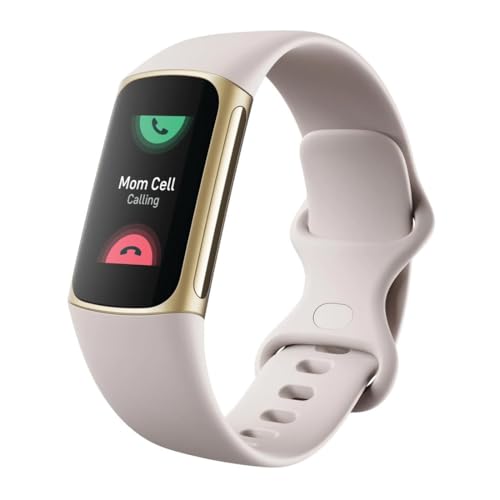

Sleep, recovery and actionable metrics
Both trackers deliver Sleep Score and sleep stage tracking. The Charge 5’s Daily Readiness (with Premium) helps you decide workout vs recovery; the Charge 6 expands that decision-making with improved sensor fusion and richer Google app integrations (maps, Wallet, YouTube Music) that make on-the-go workouts more actionable. If you want the most immediately useful workout data and gym-device integration, the Charge 6 nudges ahead; if you prioritize ECG and established stress/EDA tools, the Charge 5 still holds appeal.
Feature Comparison Chart


Performance, Battery Life and Daily Use
You’ll get a practical comparison of real-world performance: battery runtime, charging, GPS battery drain, responsiveness, on-screen metrics during exercise, and how long tracking runs reliably.
Everyday responsiveness and UI
You’ll notice snappier touch response and smoother on-screen transitions on the Charge 6 — Google apps and media controls feel more immediate. The Charge 5’s AMOLED is bright and responsive for most sessions, but complex actions (maps, music) can feel slightly slower compared with the Charge 6.
Battery life and charging
In regular day-to-day wear:
GPS and heavy connected features are the main drains; expect multi-hour GPS sessions to convert multi-day life into single- to few-day durations. Charging both devices is straightforward — plan on topping up every 1–3 days if you use GPS or streaming features heavily. Typical full charge times are roughly 1–2 hours depending on the charger.
GPS and workout tracking longevity
Charge 6 tightens GPS lock and holds HR zones steadily during intervals; on-wrist turn-by-turn directions keep you focused on training without your phone. The Charge 5 gives solid pace, distance and reliable HR zones — it’s proven over time and consumes less battery when you stick to core tracking.
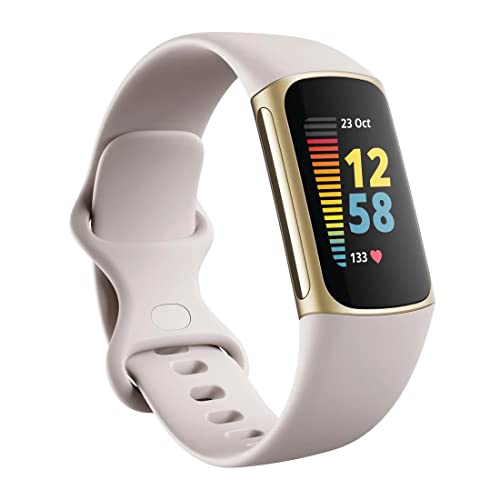

Daily charging habits and reliability
Both trackers reliably log workouts for months; Charge 6’s improved sensor fusion reduces dropped GPS pings and sync hiccups, while the Charge 5’s firmware maturity means fewer surprise updates. If you want on-wrist navigation or gym-equipment HR, expect to charge more often with the Charge 6; if you want longer between charges with dependable core tracking, the Charge 5 is the steadier choice.
Software, Ecosystem and Value: Apps, Premium and Compatibility
Here you’ll find how the Fitbit app, included 6-months Premium (Charge 6), Google apps integration, notification handling, third-party compatibility, and long-term updates affect usability and value. The section outlines which model gives the best total experience for your budget.
Fitbit app and Premium
You’ll use the Fitbit app for setup, detailed trends, and the Health Metrics dashboard on both devices. Each model ships with a 6‑month Fitbit Premium trial, so you can test Daily Readiness, guided workouts and deeper sleep/stress insights without extra cost out of the box.
Google integration and on-wrist apps
The Charge 6 adds native Google app access (Maps turn-by-turn, Wallet tap-to-pay, YouTube Music controls). That means you can navigate, pay, and control music from your wrist more easily. The Charge 5 focuses on health sensor depth (ECG, EDA) and core Fitbit experiences but lacks on-wrist Google Maps or Wallet.
Notifications and third‑party compatibility
Both handle call/text/app notifications. Charge 6 gives more interactive on-wrist controls for media and compatible gym equipment heart‑rate display, while Charge 5 sticks to reliable notifications and broader health app integrations via the Fitbit app.
Updates, long‑term support and value
Charge 5 benefits from mature firmware—fewer surprises. Charge 6, being newer and more Google-centric, is likely to receive feature-forward updates tied to Google services but may require a Google account for some features.
Key takeaways:
Final Verdict: Which Charge Fits Your Workout?
The Charge 6 is the clear winner for most active users — upgraded sensors, Google apps, and improved workout tracking make it the best choice if you train frequently or want smarter on-device features.
Choose the Charge 5 to save money while keeping reliable GPS, heart-rate, sleep, and stress tools — it’s ideal if you don’t need Google integration. Ready to upgrade or save now? Which do you pick today?



Been using a Charge 5 for a year and the battery life has degraded a bit. If the Charge 6 has more power-hungry features, I’m worried it’ll age faster. Anyone else noticed similar battery degradation on the 6?
Battery wear is inevitable with regular charging cycles. The 6 has more features which can lead to heavier usage, so managing settings (turning off always-on display, limiting GPS use) will help preserve long-term battery health.
Yep — my 5 lost about 20% capacity after a year of daily charging. Not terrible but noticeable on long trips.
I have a tiny wrist and hate when trackers look like a clunky bracelet. How are the sizes? Does the Charge 6 feel bulkier than the 5? Any opinions for small wrists?
Thanks — I’ll do that. Also, is there a big difference in band styles? I want something subtle.
I have a 6.5″ wrist and find the 6 just fine — slightly more pronounced but not bulky. The band fit options helped a lot.
Plenty of third-party bands if you want leather or woven looks. Fitbit’s silicone bands are basic but comfy.
Both models include S & L bands, so you should be covered. The Charge 6 is slightly thicker due to additional hardware, but many users with small wrists said it’s still comfortable. Try the small band and see how the screen size feels — personal preference matters here.
If possible, try it on in-store. Photos don’t always show how it sits.
I’m confused about the ‘Heart Rate on Exercise Equipment’ feature — does it mean the 6 can act like a chest strap to broadcast HR to gym machines, or is it just reading the machine’s HR? Anyone cleared this up?
Confirmed — tried it on my gym’s setup and it sent HR to the treadmill. Helped me keep the target HR zone displayed on the console.
It means the Charge 6 can broadcast your wrist HR to compatible gym equipment (like some bikes/treadmills) so the machine receives your HR data. It doesn’t read the machine’s HR; it transmits your tracker data outward.
Price vs features: if you’re not into Google apps, is there even a point upgrading from the Charge 5? Feels like ‘new shiny’ marketing.
Short answer: not always. If you mainly use the tracker for health metrics and prefer longer battery life, the Charge 5 remains a solid option. Upgrade if you want improved ecosystem features, Google integration, or slightly better sensors.
Question: The Charge 6 advertises ‘Heart Rate on Exercise Equipment’ — does that mean it connects differently? I work out on shared gym machines and wonder if it syncs HR to the equipment like chest straps do.
Good catch — that feature means the Charge 6 can transmit heart rate to compatible gym equipment or apps using Bluetooth protocols. It doesn’t universally work with all machines, but many modern treadmill/bike consoles support receiving wrist-based HR data.
I tested it on my gym’s bike and it worked — saved me from wearing a chest strap. YMMV depending on the machine.
Style notes: the porcelain/silver Charge 6 looks sleek but the Lunar White/Soft Gold Charge 5 is more subtle and blends with jewelry better.
I switched bands between both models and honestly the choice of band changes the whole vibe. If you want something dressy, get a metal mesh or woven band; for gym days stick to silicone.
Omg mesh band photos, please? 😂 I’m picturing it like a tiny smartwatch glam.
Great tip — bands really transform the look. Colors and finishes are personal, so think about your wardrobe and where you’ll wear the device most.
Haha not here but Etsy and Amazon have tons. The mesh makes it look like jewelry rather than a fitness band.
Thanks for the breakdown — I’ve been trying to decide between the Charge 6 and Charge 5. The GPS and Google apps on the Charge 6 sound great, but battery life is my top priority. Any real-world thoughts on how long the 6 lasts compared to the 5 during heavy GPS use?
Ordered the Charge 6 yesterday after reading this — excited! Wanted the GPS and Google features, and the porcelain color is gorgeous. Will report back after a week of testing 🙂