
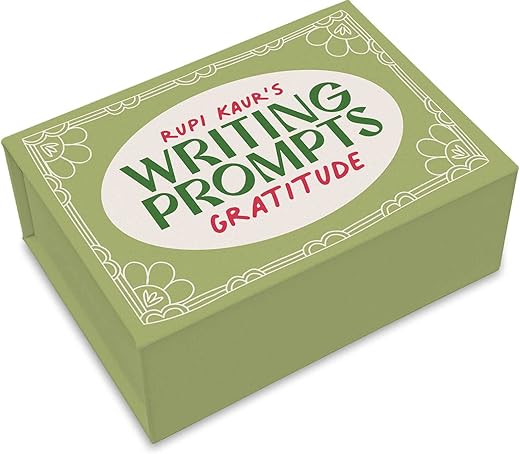
Start a Gratitude Habit That Sticks
You’ll learn a simple, six-step process to craft prompts that spark grateful reflection every day, moving you from blank-page panic to a ready bank of meaningful prompts you can use in minutes for morning or evening practice and keep momentum.
What You’ll Need

Clarify Your Purpose
Why do you want to feel grateful every day? Nail your why and everything else becomes easier.Name why gratitude matters to you—reduce stress, deepen relationships, shift perspective, or simply savor small joys. Pin a short, specific goal to your practice so prompts feel relevant and motivating.
Ask yourself quick clarifying questions and write one-line answers. Consider these starters:
For example, if you want to reduce stress, choose prompts like “What small comfort helped me breathe today?” If you want closer relationships, try “Who made me feel seen this week?” Use your answers as the lens for every prompt you create, helping you choose language and focus that actually motivates you to write.

Choose a Prompt Type
Different prompts train different parts of your mind — which mental muscle do you want to strengthen?Decide what style of prompt will best serve your purpose. Pick from these styles:
Mix short-fuse prompts for busy days with deeper prompts for reflective sessions. Try swapping types across the week to keep your practice fresh.

Use Simple, Specific Language
Specific beats vague — a tiny detail can unlock a whole flood of appreciation. Want more impact? Get concrete.Write prompts that are short, specific, and action-oriented. Replace vague asks with anchored, recall-friendly cues so you actually remember details.
Use verbs, time frames, and sensory cues. For example, after a noisy morning commute you might answer a prompt that asks about sound rather than “What are you grateful for?” — that makes recall immediate.
Focus on clear actions: name, describe, recall, notice. Add time markers like today or this week and sensory words like see, smell, taste, hear to guide memory. Keep prompts under 12 words when possible so you can answer them quickly and consistently.

Layer Prompts for Depth
Stack questions like an emotional onion—peel one layer and you’ll find richer insights below.Create micro-sequences: use a primary prompt, a follow-up, and an expansion to move from listing to meaning-making without extra time. Use the Notice‑Explain‑Expand pattern to deepen insight quickly.
If you’re rushed, answer the notice line. If you have a few minutes, add the explain step. If you want to reflect, finish with the expand step. For example:
Personalize and Experiment
One size fits none—tweak wording, timing, and format until prompts spark joy and stick.Treat prompts as experiments. Try different times of day, first‑person versus second‑person phrasing, or switch from writing to voice memos to see what sparks richer entries.
Test small changes and record results:
Try one change for a week and note mood shifts or deeper insights. For example, try answering “What made me smile this morning?” right after your commute for three days; notice whether your entries feel more vivid. Rotate favorites, retire prompts that feel rote, and anchor the habit to a reliable cue. Small tweaks make the difference between a checklist and a meaningful ritual.
Create a Ready-to-Use Prompt Bank
Never stare at a blank page again—build a go-to library that gets you writing fast.Compile 30–60 prompts organized by category (people, senses, challenges, wins). Tag each prompt by length or depth so you can pick a quick prompt or a deep dive when you need it.
Tag examples: Quick (30–60s), Reflective (5–10 min), Deep (15+ min). Keep a starter set of ten go‑to prompts you love and can use any day.
Include these sample prompts:
- What small thing made you smile today?
- Who helped you recently and how?
- Name a challenge that taught you something.
- Describe a comforting smell you noticed.
- What’s one convenience you’re grateful for right now?
- Who made your life easier this week?
- What skill are you grateful to have?
- When did you feel rested today?
- What’s a recent surprise that brought joy?
- How did nature show up for you this week?
Rotate and refresh your bank monthly.
Turn Prompts into Practice
Now build your six favorite prompts and try them for two weeks. Small, consistent prompts create big shifts—start simple, be curious, and adjust as you go. Ready to see how little daily gratitude can change your life in meaningful ways?




This guide pushed me to actually personalize my prompts. Instead of generic “What are you grateful for?” I wrote “Who said something that made me feel seen today?” — wow, way more emotional.
Also, “Turn Prompts into Practice” felt actionable — the reminder + 2-minute rule is a keeper. Thanks!
Ooh that’s a beautiful prompt. Might borrow it 🙂
Love that tweak, Tom — shifting to people-focused prompts often opens up richer memories. The 2-minute rule is a simple but powerful nudge. Keep experimenting!
I appreciate the structure here but I’m a bit stuck on how to “Layer Prompts for Depth” without overthinking. Can someone show a short example of a 2-3 layer prompt sequence for a mundane thing (like doing dishes or a commute)?
Also curious about the “Create a Ready-to-Use Prompt Bank” — do people keep that in a notebook, app, sticky notes? What has actually worked for real folks?
I printed a two-column list and taped it to my fridge. When I don’t know what to write I just point. 😂
Great question, Aisha. Example layering for doing dishes:
1) “What about this moment am I grateful for?” (surface)
2) “Why did that make a difference to me?” (meaning)
3) “How could I notice more moments like this?” (action)
For prompt banks: some keep a pinned note in their phone, others use a small index card box, and some keep a single dedicated page in a notebook. Pick whatever you’ll actually open — that’s the main rule.
Real talk: whatever you can access in the moment wins. I love the index card idea — low-tech but oddly satisfying.
If you like tinkering, keep a digital bank and tag prompts by mood/length. Then you can filter “5-min” or “deep” prompts. Works well for variety.
I use an app (simple notes) and a physical 3×5 card for travel. The card keeps it tactile and the app is handy when I’m out. Mix of both.
Love this guide — super practical.
I started a tiny gratitude habit last month and your “Start a Gratitude Habit That Sticks” section really clicked. I switched from vague prompts to very specific ones (like “What made my commute easier today?”) and honestly it made the whole thing less meh and more useful.
Also, layering prompts (step 4) helped — I first list something I’m grateful for, then ask “why did that matter?” and then “how can I notice more of this?”. Feels deeper without being heavy.
Thanks for the prompt bank idea — I’ll steal a few and tweak them. 🙂
Nice tip. I tried the commute prompt and it forced me to notice small kindnesses (driver letting me merge) — felt good. Tiny wins!
So glad that clicked, Mark! Love the commute prompt — specificity is magic for making gratitude feel real. If you want, I can suggest a few follow-ups that pair nicely with that one.
This is helpful — I do something similar with my evening walk notes. The “why did that matter” follow-up always makes it feel less like a checklist and more like a mini-reflection.